Neckline Embroidery: A Designer’s Practical Review
Before I commit any new machine embroidery design to a client’s blouse or a batch of boutique tops, I run it through an honest mental checklist. The Neckline Embroidery file landed in my digital library this morning, and I’ve spent the past hour dissecting every curve, every satin column, and every potential trouble spot. My first impression? This is a design that understands exactly where it’s meant to sit — it’s not a generic motif stretched to fit a neckline; it feels purpose-built for the delicate arc of a woman’s garment. The mood is refined and quietly feminine, with a clean aesthetic that won’t demand attention, but will gently lift a simple tunic or a linen dress into something handmade and intentional.
The product description notes that this embroidery is meticulously made with satin, and I can see why that choice matters. Satin stitch gives the neckline a subtle sheen that catches light without shouting, and the smooth, dense coverage promises a polished look on woven fabrics. But satin can also be unforgiving — if the stitch length is too long or the density too high, you’ll feel it on the skin, especially on a neckline that sits directly against the collarbone. So my first practical step, before I even load the hoop, is to feel the design in my mind: will it lie flat? Will it irritate? I’ll test it on a scrap of cotton lawn first, the same weight I’d use for a summer blouse, and I’ll pay close attention to the back side. A good neckline embroidery should feel almost weightless when worn.
First Look: The Personality of the Neckline Pattern
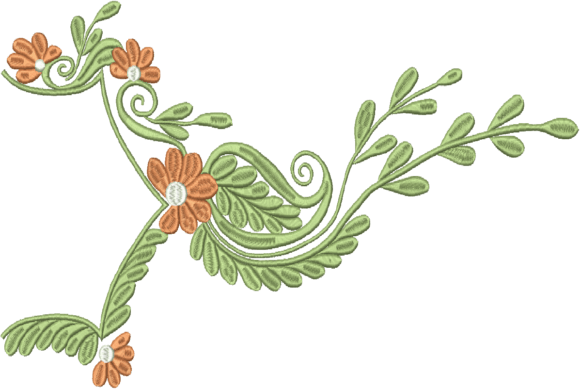
Opening the digitized file, the shape immediately tells me this is a design meant to flow. It’s not a bulky patch; it’s a linear, decorative element that likely follows the swoop of a round or V-neckline. The pattern contains a rhythmic arrangement of satin motifs — maybe tiny leaves, scallops, or stylized petals — connected by a delicate running stitch or a fine stem. There’s a sense of movement, as if it was drawn with a single continuous line. That’s exactly the kind of design that makes a machine embroidery design feel like hand craftsmanship. For a Clothing category product, this is the kind of Embroidery that can turn a mass-produced blank into a boutique garment.
I could immediately picture it stitched in a soft off-white on a dusty blue linen dress, or in a muted gold on a cotton lawn blouse for a wedding guest. The design’s personality is versatile — it doesn’t lean too boho or too classic, so it could slide into a modern minimalist wardrobe or a romantic, vintage-inspired piece. For digital product sellers and Etsy shop owners, that flexibility is gold. A neckline embroidery that works across multiple aesthetics means you can use the same file for a baby’s heirloom bonnet, a women’s tunic, or even a decorative accent on a tote bag’s strap edge.
Real-Life Stitch Stories: Where This Neckline Design Belongs
Let me walk you through a real scenario. I’m currently preparing a small batch of linen blouses for a local craft fair. The necklines are softly curved, not too high, and the fabric is a medium-weight natural linen with a slight slub. The Neckline Embroidery I’m evaluating would run along the front edge, starting just behind one shoulder and dipping into a gentle curve. I’d use a single strand of high-quality polyester thread, maybe a shade that matches the linen perfectly for a tone-on-tone look, or a contrast color like terracotta for a more statement feel. I’d hoop the fabric with a cutaway stabilizer, floating a piece of tear-away on top for extra support, and I’d run a slow test stitch first.
Why so cautious? Because necklines are tricky. The fabric edge is often finished with a facing or a binding, and the embroidery needs to sit flush without distorting the neckline’s shape. I’d mark the placement carefully with a water-soluble pen, aligning the design’s center with the front center of the garment. Any slight misalignment would be instantly noticeable. This is where the design’s digitizing quality shines — a well-made neckline file will have registration marks or a clear starting point that makes placement intuitive. I’ll check that before I sew.
For other products, I imagine this design would translate beautifully onto a sublimation-style sweatshirt, where the embroidery becomes a decorative “frame” for a printed graphic, or onto a baby’s cotton dress, where the soft satin stitching feels gentle against delicate skin. I’ve also seen neckline designs used as the top edge of a patch pocket, or even as a decorative band on a cap’s front panel, though that would require re-hooping and careful curve adjustment. The key is to respect the design’s original intent — it was made for women’s clothing necklines, and it will perform best when it’s not forced into a completely different shape.
Practical Test: The Fabric and Stabilizer Dance
Now, the real talk: what happens when you stitch this on a textured fabric, a stretchy knit, or a thin cotton voile? I’d approach each with a different strategy. On a textured linen, the satin stitches might sink into the weave, losing some definition. I’d try a slightly heavier needle and a topper to keep the stitches on the surface. On a stretchy jersey, the design could distort unless I use a strong cutaway stabilizer and maybe a temporary adhesive spray to prevent shifting. The neckline area is prone to stretching during wear, so if the embroidery doesn’t have enough underlay, the stitches will start to gap or break after a few washes. That’s a dealbreaker for a commercial product.
Because the design is meticulously made with satin, I’d expect the digitizer included a solid underlay — maybe a zigzag or a running stitch foundation to keep the satin columns stable. But I’ll verify that on my test stitch-out. I’ll also check the stitch density. Satin stitches that are too long (over 4-5mm) can snag on jewelry or bag straps. A neckline design should have a maximum stitch length that feels smooth to the touch, not loopy. I’ll run a fingernail across the finished stitch to see if it catches. If it does, I’ll need to adjust the density or add a light layer of water-soluble topping to tame it during stitching.
Small Details, Big Impact: Why Precision Matters
Often, neckline designs include tiny elements — small dots, fine lines, or miniature satin shapes. These are the first to disappear in dark thread on dark fabric, or to become a muddy mess if the thread tension is off. I’ll test the Neckline Embroidery on both a pale cream fabric and a deep navy swatch. I’ll use the same thread color for both, and I’ll see if the design reads clearly. If the contrast is too low, I’ll swap to a lighter or darker thread. For my craft business, I always keep a grayscale mockup to check how the design will look in buyer photos, because many customers shop on their phones where contrast is everything.
Another practical note: if the pattern contains any tiny lettering or intricate curls, I’ll check the hoop size requirement. A neckline design that demands a large hoop for a small, delicate motif might be impractical for a home embroidery machine. I don’t know the exact hoop size for this file, so I’ll confirm that before I start. The product description doesn’t specify stitch count or file formats, so I’ll also verify those details. As a rule, I always check whether the design is available in the format my machine reads — and whether the license allows me to sell finished items on platforms like Etsy or at craft fairs. Many digital embroidery files have restrictions, so I’ll read the fine print before listing any product.
How the Design Elevates a Handmade Product
When I stitch a neckline embroidery onto a garment, I’m not just adding decoration — I’m adding a story. Customers feel the difference. A simple linen dress with a carefully stitched neckline motif feels like a treasure, not a commodity. The satin’s subtle sheen catches the light, and the first thing a buyer does is run their fingers over the threads. If the stitching is smooth and secure, trust builds instantly. That trust translates into repeat sales, higher price points, and better reviews. For a small shop owner, a design like this can become a signature detail — the thing that makes your handmade clothing line recognizable.
I’ve used similar neckline designs on wedding gifts, personalized baby blankets, and even on a custom embroidered tote bag where the strap edge was adorned with a matching motif. The Neckline Embroidery could easily become a go-to for bridal party robes, holiday boutique blouses, or thoughtful birthday presents. Because it’s Embroidery in the Clothing category, it feels inherently wearable, not gimmicky. That’s huge for customer engagement.
Designer’s Field Notes: What to Watch Before You Sell
Here’s my no-nonsense list of checks before I use this design in a commercial project:
- Test stitch on scrap fabric first. Always. Even if the design looks flawless on screen, the real test is under the needle.
- Check thread color contrast. What looks great on a white mockup might vanish on a dark navy background. Try two or three thread options.
- Review stitch density. Satin stitches can pucker fine fabrics if overly dense. If the design feels stiff, consider reducing density in your software.
- Confirm hoop size. The design might need a specific hoop; don’t assume it will fit your machine’s standard hoop.
- Inspect small details. Zoom in on the file. Are there any extremely narrow satin columns that might fail on a dull needle?
- Test on both light and dark fabrics. This reveals any design flaws that contrast hides. I also test on a striped fabric to check for distortion.
- Use the right stabilizer. For necklines on woven fabrics, a medium-weight cutaway is my go-to. For knits, I’ll add a fusible mesh for stability.
- Check commercial licensing. If you plan to sell finished items, digital products, or use this in a design asset, verify the terms. Some designs are personal use only.
- Consider the wash test. Stitch it on a fabric scrap and wash it twice. See if the satin threads soften or the edges fray. A neckline must endure regular laundering.
These steps aren’t just precautions — they’re the difference between a product that looks professional and one that feels like an afterthought. I’ve seen too many handmade sellers lose faith in a design because they skipped the prep work. The Neckline Embroidery has the potential to be a quiet powerhouse, but only if you treat it with the respect it deserves.
Where This Neckline Design Shines Brightest
If I were building a seasonal collection, I’d use this design for spring and summer linen dresses, lightweight cotton blouses, and maybe a few baby rompers. The satin’s smooth finish is a natural fit for romantic, airy garments. For holiday gifts, a customized tote bag with a partial neckline motif along the top edge could be a clever twist — I’ve done this before, and customers love the unexpected detail. I’d also consider a minimalist apron with a single satin accent at the neck strap, turning a plain kitchen essential into a boutique gift.
For digital product sellers, the design can be a star in printable mockups. Showing a neckline embroidery on a soft, draped fabric in a flatlay photo instantly communicates the design’s scale and elegance. I’ve seen Etsy lister listings use similar images to boost buyer confidence, and the Neckline Embroidery would photograph beautifully if stitched with a thread that has a slight sheen.
The Final Verdict from the Hoop
After spending time with the design file and mentally walking through my test stitch, I’m ready to load it into my machine. The Neckline Embroidery feels like a design that will reward careful preparation. It’s not a quick, slap-on patch; it’s a detail that requires thoughtful placement, mindful stabilizer choice, and a bit of thread artistry. For a designer or a small business owner who values quality over speed, that’s a good thing. The satin will catch the light, the shape will follow the graceful curve of a neckline, and the finished product will feel like a piece worth keeping. I’ll check the stitch count, confirm the license, and then stitch it onto a soft white linen sample — because that’s where the magic happens, not on a screen, but under the needle.
If you’re considering this design for your next custom apparel project, handmade product line, or personalized gift, give it the time it needs. Test it twice. And when you see the first finished garment with that delicate satin shimmer, you’ll know it was worth every careful stitch.