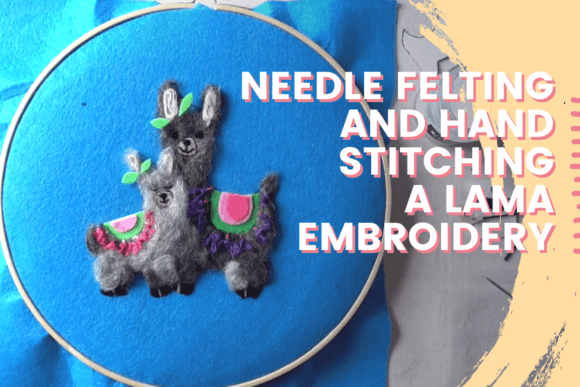
Needle Felting and Hand Stitching a Lama Embroidery
First Glance: A Cozy, Artisan Project Packed with Seasonal Charm
When I first opened this Creative Fabrica class, I felt an immediate pull toward something warm and nostalgic. The project is a delightful blend of needle felting and hand embroidery, showcasing a lama with a gentle expression, surrounded by whimsical flowers made from craft felt. Nicole Clark’s guidance transforms what could be a simple animal motif into a richly textured piece of art. The overall mood is playful and rustic, with a hint of elegance that makes it feel right at home in a holiday craft collection. It’s not another generic machine embroidery design — it’s a tactile, slow‑stitch experience that brings back the cozy, handmade spirit buyers crave during the gifting season.
The decorative style leans toward a modern farmhouse aesthetic, but with enough softness to work for baby items or whimsical winter decor. The lama’s fluffy wool‑felted body and the delicate hand‑stitched floral accents create a layered, dimensional look that flat embroidery simply can’t match. I can already picture this on a pillow cover tucked into a holiday market display, or on a tote bag that becomes a gift itself. The emotional tone is comforting and cheerful, perfect for cold‑weather months when customers want something that feels personal and heartwarming.
How This Class Performs in Real Holiday Selling Situations
As a small‑shop owner, I’m always asking: “Can I turn this into a product that sells?” With this class, the answer is a confident yes — but in a thoughtful, artisan way. Because the finished piece is a physical object you create by hand, it naturally lends itself to limited‑edition drops, custom orders, and premium pricing. For Etsy sellers, the lama is a topic that consistently trends, and combining it with the rustic charm of felt and hand stitching makes listings stand out against mass‑produced goods.
Let me walk you through a few real scenarios I’ve mapped out for my own holiday collection. First, gift bundles: a set of two coaster‑sized lama ornaments, each with slightly different floral colors, tied with a ribbon and sold as a “Cozy Holiday Pair.” The dimensional texture catches the light beautifully on a Christmas tree, and because they’re not machine‑embroidered patches, they have a genuine heirloom feel. Second, craft fair displays: I’d mount a finished lama piece in a simple embroidery hoop, add a fabric backing, and present it as ready‑to‑hang wall art. At a holiday market, where shoppers are looking for unique, handmade gifts, this kind of piece stops people in their tracks. I can also see it stitched onto a kitchen towel for a hostess gift, or onto a premium sweatshirt for a limited‑edition apparel item. The wool felt adds a soft, plush texture that begs to be touched, and that sensory experience is invaluable in a physical shopping environment.
For social media previews, the layered process is a content goldmine. I can film the needle felting stages, the stitch work, and the final assembly, then post those clips as reels or TikToks. The slow, meditative nature of the project resonates with audiences who love “process” videos, and the lama itself is endlessly photogenic. Even printable mockups can be adapted: I’ll photograph the finished piece on a neutral background and digitally overlay it onto product templates to gauge consumer interest before committing to a full production run. The class supports a flexible, inventory‑light approach — you make what sells, and every piece is inherently unique, which feeds the customer’s desire for a personalized gift.
Using the Finished Lama Art Carefully: Where It Shines and Where to Take Caution
Because this is a mixed‑media project, not a digital embroidery file, the usual machine‑embroidery limitations don’t directly apply. However, the physical nature of the finished piece calls for its own set of careful-use notes. The wool felt and hand stitches are delicate compared to dense machine stitching. I would avoid putting the lama on items that require frequent, aggressive washing — like everyday kitchen towels or baby bibs — unless you’re willing to add a clear care tag recommending hand washing and air drying. The same goes for thick, lofty fabrics; the felted base might not sit flat on a chunky knit sweater, and the stitches could distort if stretched. For stretchy garments, a stabilizer is still relevant: I’d back the finished patch with a lightweight fusible interfacing before attaching it to a T‑shirt or onesie to prevent sagging.
Small details are another area to watch. The lama’s facial features are created with hand stitching, so on very dark fabric, the contrast might weaken. I always test a sample on a charcoal sweatshirt and a cream linen pillow to see how the thread colors pop. If the design includes tiny lettering (the class doesn’t specify, but you might add a name), I’d simplify it or scale up the piece to keep it legible. Metallic threads are popular for holiday sparkle, but they can be finicky; I’d stick to the recommended cotton or wool threads for the core stitching and maybe add a touch of metallic in the floral centers for a festive gleam. The finished piece is not a patch in the traditional sense — it’s a miniature textile artwork. So treat it as you would a cherished embroidery: mount it on items that will be handled with love, not tossed in the laundry basket every week.
Seasonal Appeal, Emotional Connection, and Selling Power
The lama design has an uncanny ability to tap into buyer emotions during the holiday rush. It’s cute without being childish, rustic without being rough, and the floral accents give it a romantic, almost vintage sensibility. This versatility means it can sit comfortably in a Christmas collection, a winter baby shower gift set, or a Valentine’s Day “cozy love” theme. The needle felting technique introduces a softness that makes the piece feel like a hug — exactly the kind of sensory comfort people want when they’re shopping for family matching items or a special gift for a new mom.
From a product value perspective, the mixed‑media nature elevates the perceived worth. A machine‑embroidered sweatshirt might sell for $35, but a hand‑felted and stitched lama on a premium sweater could easily command $65 or more, especially when presented as a limited edition. Customers trust the handmade story; they’re buying the hours of skill and the artist’s eye. For brand consistency, I’d develop a signature color palette — maybe a soft terracotta, dusty blue, and oatmeal white — and use it across all my lama pieces. This creates instant visual recognition on my Etsy shop and at craft fairs, and it reinforces the cozy, premium feel I want my brand to own. The engagement on social media is also higher for mixed‑media projects because they look so different from the sea of digital vector art. The texture, the depth, the visible stitches — they all contribute to a scroll‑stopping image that tells a story of care and craftsmanship.
Practical Designer Notes for a Smooth Creative Process
Before you dive into producing finished items for sale, I recommend a few practical steps that I’ve learned the hard way. First, test your thread colors on both light and dark fabric swatches. The hand embroidery component uses traditional stitching, and what looks vibrant on a cream wool felt might disappear on a forest green tote bag. I keep a small swatch book of my go‑to fabrics and quickly stitch a few sample petals to check contrast. Second, confirm the stabilizer strategy. Even though much of the work is done with a felting needle, the final piece will be attached to a product. For a tote bag, a medium‑weight cutaway stabilizer behind the fabric gives the stitches a secure foundation and prevents puckering. For a pillow cover, a tear‑away works well, but I always fuse a lightweight interfacing to the back of the finished lama before stitching it to the cover for extra durability.
Realistic mockups are your best friend. Photograph the finished piece in natural light, then use a simple editing tool to place it on a digital mockup of a sweatshirt, tea towel, or ornament. This helps you gauge scale and gives you polished listing photos without having to create every product variation upfront. After you finish each piece, take a magnifying glass to the small details — the spacing of the flowers, the tension of the stem stitches, the density of the felted wool. These minute checks ensure consistency when you’re making multiples for a craft fair or a batch of custom orders. Also, plan a matching color palette for your threads and wool roving before you start. I usually pick three to four core colors that work across all my holiday products, so every piece feels like part of a cohesive collection.
Of course, I always remind my fellow makers to review the Creative Fabrica class details and licensing carefully before selling finished items. Nicole Clark’s guidance is clear and thorough, but it’s your responsibility to understand what you can and can’t do commercially. Since this is a class, not a digital embroidery file, the output is your own handcrafted work, which generally gives you more freedom to sell the finished products. However, I never assume — I double‑check the terms, note any attribution requirements, and keep a copy of the class access for my records. That small administrative step protects your business and keeps your creative joy intact.
In my experience, a project like this becomes a quiet bestseller in a seasonal lineup. It’s not a quick turnaround, but the time invested yields a product that feels deeply personal and unmistakably artisan. For holiday shoppers hunting for that one‑of‑a‑kind handmade gift, a needle‑felted and hand‑stitched lama checks every box: warmth, charm, quality, and a story they’ll want to share. I’m already planning a small batch of these for my winter market table, and I suspect they’ll be the first to go.