Free Flower Embroidery: A Craft Fair Seller’s Review
When I’m prepping for a weekend market, every design I stitch needs to earn its spot on the table. My eye goes straight to how a motif looks from three feet away, how it feels in a customer’s hand, and whether it can turn a simple blank into something people reach for. Free Flower Embroidery — listed as a Free Flower Bouquet Embroidery Design — landed in my digital library as a freebie, and I immediately saw its potential for handmade booth staples like clothes, pillows, and bed sets. But as any experienced embroidery designer knows, a free download only tells half the story. The real test is whether it sews out clean, photographs well, and makes a product look like a finished piece of boutique craftsmanship, not a rushed craft.
This design comes with multiple embroidery file formats, which is a huge plus for a small shop owner juggling different machines. I loaded it into my software and walked through the same evaluation I’d give any paid machine embroidery design I planned to sell finished goods from. Here’s my honest, real-world take on where Free Flower Embroidery shines, what to watch out for, and how to turn it into a bestseller at your next craft fair.
First Impressions: A Soft, Romantic Bouquet That Feels Both Farmhouse and Feminine
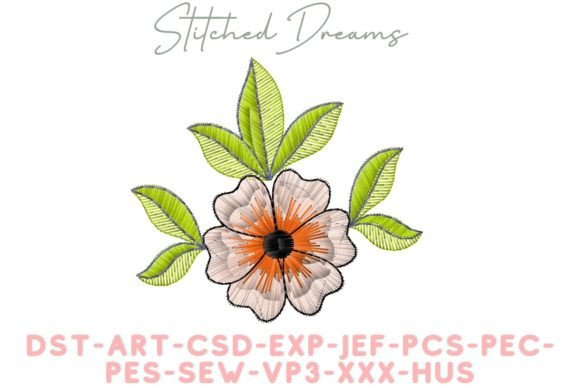
Right out of the digital envelope, the bouquet reads as gentle, decorative, and intentionally sweet. The title and preview suggest a clustered floral arrangement — possibly a mix of daisies, roses, or wildflower silhouettes — that leans romantic without being overly fussy. It’s not a bold, graphic statement piece, and it’s not a tiny minimalist accent. It sits comfortably in that middle ground where handmade product charm meets everyday wearability. I’d place it squarely in the farmhouse, rustic, and soft-glam categories, making it a versatile blank canvas for spring markets, Mother’s Day, bridal showers, or simply a “treat yourself” impulse buy.
Because the design is a bouquet, it naturally draws the eye upward and creates a sense of movement. That makes it ideal for products where you want one focal point — the corner of a tote bag, the center of a tea towel, or the upper chest of an apron. The freebie nature of it might tempt some sellers to dismiss it, but a well-chosen thread colors palette can elevate this design to look premium. Think soft dusty pinks, sage greens, and creamy ivory on linen, or deep burgundy and navy on natural canvas. The mood is entirely moldable.
Where This Design Shines at a Craft Fair Table
I ran through my mental checklist of craft fair product staples and immediately saw at least a half-dozen winners. The design’s shape and scale work beautifully as a focal point, not a repeating pattern, so it’s best used where one bouquet can dominate the surface.
- Tote bag design: A single bouquet stitched diagonally in the lower corner of a canvas tote instantly turns a plain carryall into a giftable item. Shoppers grab totes for their own use or as gift wraps for other purchases. This design makes the bag the gift.
- Apron embroidery: A full apron with the bouquet centered on the bib or placed asymmetrically near the pocket feels like a luxury kitchen accessory. I’d pair it with a coordinating tea towel to create a set.
- Tea towel embroidery: This is arguably the sweet spot. A flour sack towel with the design centered a few inches from the bottom hem photographs beautifully in a stack. Customers love functional tea towel embroidery that looks like heirloom detail.
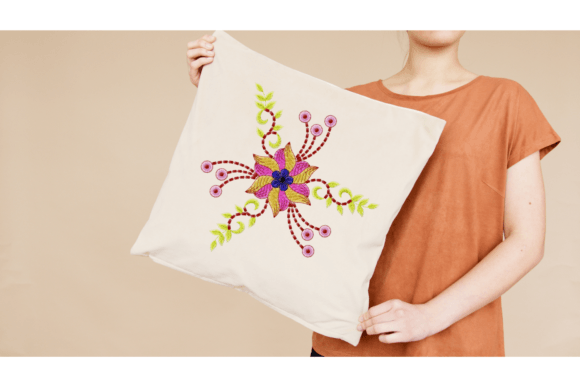
- Pillow covers: A 16x16 or 18x18 cover with the bouquet in the center gives a soft, decorator feel. It’s a high-perceived-value item that can command a higher price point.
- Embroidered patch: Stitched on felt or twill with a dense satin-stitch edge, the bouquet becomes a standalone patch. Patches work as low-cost, high-margin impulse buys. I’d test the design at a reduced size first to ensure no tiny petals lose their clarity.
- Small pouches and zipper bags: A miniature version of the bouquet on a linen pouch makes a lovely giftable cosmetic or accessory bag. The same design can be scaled down if the stitch density allows.
In every case, the design is easy to understand at a glance. A customer walking by doesn’t need to squint. They see a flower bouquet, and that immediate recognition is what stops them. For online sellers, the same clarity translates to printable mockup photos and Etsy thumbnails. Floral designs never go out of style, and the search volume for “floral embroidered tote” or “flower apron” is steady year-round.
Production Realities: What an Embroidery Designer Looks For Before Stitching
As much as I love the look, I don’t trust a design until I’ve sewn it out on the fabrics I plan to sell. Here’s where my practical brain kicks in. Stitch density is the first thing I check. In many free bouquet designs, the flower centers or overlapping leaves can become dense, which on lightweight fabrics like a thin cotton pillow cover might cause puckering. I’d test on a medium-weight linen or cotton canvas first, then try a lighter quilting cotton to see if I need to adjust my stabilizer.
For apron embroidery on denim or heavy twill, the design will likely sit flat and crisp, but on textured towels, dense areas can sink into the pile. I always use a water-soluble topper on terry cloth to keep the stitches on top of the fabric. For curved cap surfaces, the bouquet’s rounded shape might need careful placement in the hoop, and I’d run a test on a scrap cap to ensure the stems don’t distort. If the design includes tiny details like thin stamen lines or very small leaves, these could become lost or muddy on dark fabric, so I’d double-check the contrast with my chosen thread colors.
One major advantage for batch production: a floral bouquet is repeatable. Once I dial in the stitch time and material cost, I can stitch ten tote bags with consistent quality. The design doesn’t require precise alignment like a matching set, so a slight variation in placement actually adds to the handmade charm. For Etsy seller listings, I’d photograph the very first sample against a neutral background with a few blooms or a sprig of dried lavender, then use that image as a design assets mockup for all color variations.
Visual Impact and Buyer Psychology: Why a Floral Bouquet Sells
Flowers trigger an emotional response. They’re linked to gifting, self-care, spring, and home. At a craft fair, a table with a cohesive floral collection — tote bags, tea towels, pillows, and maybe a few aprons — signals that the maker has a clear brand. Customers perceive a higher value when they see a curated set rather than a random assortment. Free Flower Embroidery gives you that anchor. Because it’s from the Freebies category, it’s a low-risk entry point to test whether a floral theme resonates with your audience.
I’ve seen buyers walk past a booth, pause at a floral tote, and immediately pick it up. The hand softly touches the stitches. That tactile moment is everything. This design, with its soft bouquet shape, invites touch. For small shop product owners, that means you want to stitch it where the texture is undeniable — on a chunky linen, a waffle weave towel, or a heavyweight canvas. The design itself becomes part of the quality story.
My Pre-Production Checklist for Free Flower Embroidery
Before I load a single hoop for market inventory, I run through a standard checklist. Treat this as your insurance against wasted materials and time.
- Review the embroidery file in your software. Check for any weird jump stitches or trims, and confirm the design’s dimensions match the hoop size you plan to use. The product description notes multiple file formats, so pick the one for your machine and verify stitch count.
- Test on scrap fabric. Use the same weight and weave as your final product. This reveals any stitch density problems early.
- Compare thread colors. I often stitch a small text-only color card alongside the design. Muted sage, dusty rose, cream, and soft navy all work beautifully with a floral bouquet, but test dark thread on light fabric and vice versa.
- Use the right stabilizer. Cutaway on stretchy or lightweight fabrics, tear-away on sturdy canvas, and a topper on towels. For fabric texture like linen or crosshatch, a fusible mesh stabilizer can prevent distortion.
- Confirm commercial licensing. A freebie design doesn’t automatically mean it’s free for commercial use. Before you sell any finished product with this design, review the designer’s license terms. If commercial rights aren’t explicitly granted, reach out and ask. This protects your commercial embroidery business.
- Create at least one real mockup. Stitch the design onto a tote bag or apron, style it with a few props, and take a photo in natural light. This becomes your printable mockup for social media and shop listings.
- Check placement on curved or small surfaces. If you’re planning embroidered patch versions, reduce the design size in your software and stitch a sample to ensure no tiny details break down. For caps, test the arc and placement before committing to a dozen.
Final Verdict: A Versatile, Easy-to-Love Design for Craft Fair Sellers
Free Flower Embroidery is one of those rare freebies that can genuinely hold its own on a paid market table. It’s soft, feminine, and instantly understood, which makes it an easy sell for a wide range of handmade products. The fact that it comes with multiple embroidery file formats means you can use it across different machines, which is a huge time-saver for a small shop. I’d build an entire spring collection around this bouquet, pairing it with simple monograms or keeping it as a standalone statement on linen pillows and sturdy tote bags.
As with any digital embroidery file, the real value comes from your testing and your finishing. Invest a few hours in sampling, choose thread colors that look intentional, and always double-check your stabilizer. The design will reward you with a finished product that looks handcrafted, not homemade. For an Etsy seller or a weekend market vendor, that’s exactly the line you want to walk.